 Historical Sites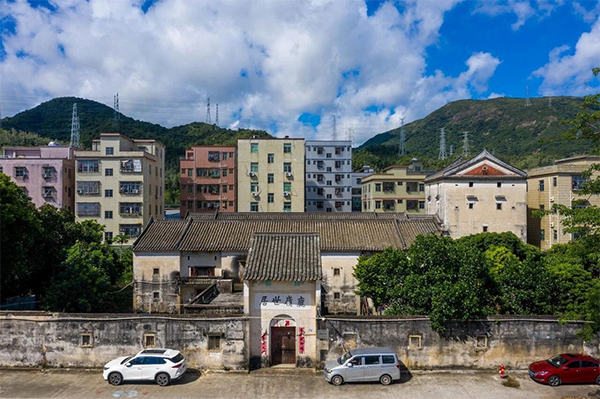
A view of Luling Ancestral Residence in Pingshan District. Photos by Lai Li unless otherwise stated
In Biling Community, Pingshan District, stands Luling Ancestral Residence (鹿岭世居), a Hakka walled residence covering 2,206 square meters. The complex consists of a five-story watchtower surrounded by three rows of buildings. Above the main gate, four black characters — “鹿岭世居” (Deer Ridge Residence) — are flanked by calligraphic excerpts from the "Preface to the Poems Composed at the Orchid Pavilion" and the "Preface to the Pavilion of Prince Teng." The inscriptions were written by Wen Dabin in 1932.
Luling Ancestral Residence was built by members of the Liao clan who had returned from Tahiti in the early 20th century. Construction took 28 years and was completed in 1932. The design combines Western-style villa layouts with traditional Hakka architecture. Doors and windows are decorated with carvings of deer, streams and mountains, as well as poems and calligraphy, all of which remain clearly legible.
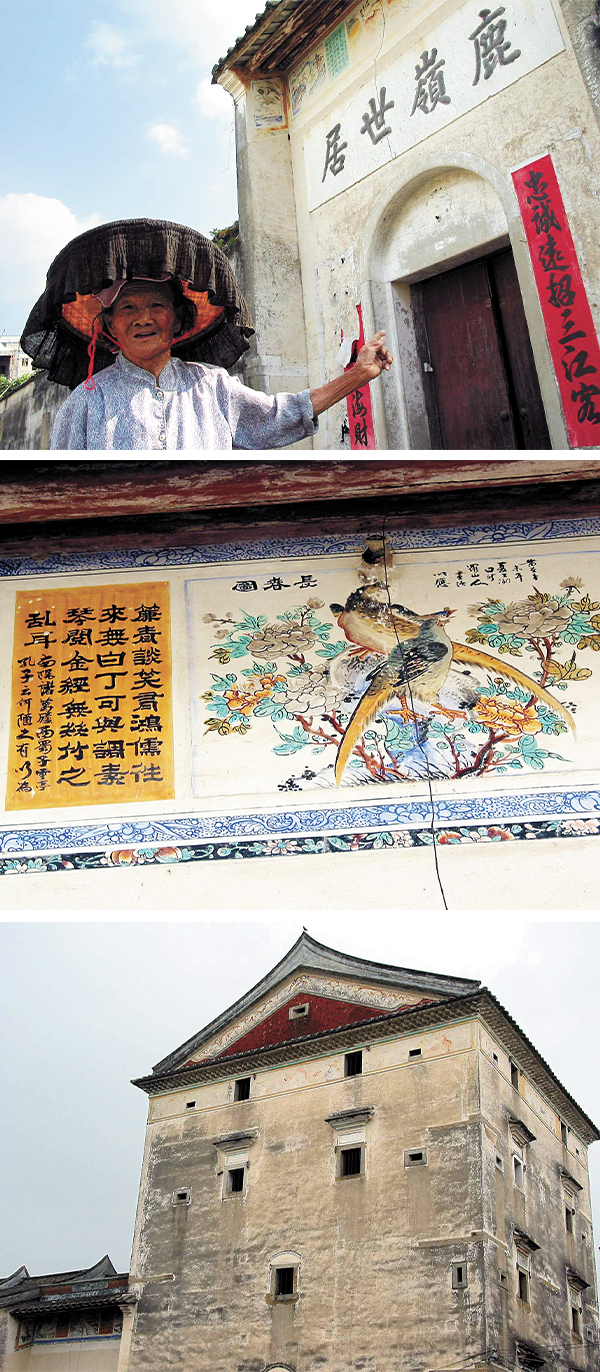
Photos by Jia Shaoqiang
The residence preserves the rustic charm of Hakka tradition while incorporating modern comforts, earning it the title “Crown of Pingshan.” The deer — a symbol of peace and prosperity in Chinese culture — gave the residence its name.
Luling Ancestral Residence also served as a base for revolutionary forces during the Chinese People's War of Resistance Against Japanese Aggression and the War of Liberation, housing up to 300 soldiers at its peak. The watchtower offers unobstructed views for 6 to 8 kilometers in every direction, with the Pingshan basin to the east and the Sanzhoutain mountain area to the west. Its commanding views and defensible location made it a strategically important site and gave the residence a distinctive revolutionary legacy.
To get there, take Shenzhen Metro Line 14 to Baolong Station (宝龙站), and then take a taxi.
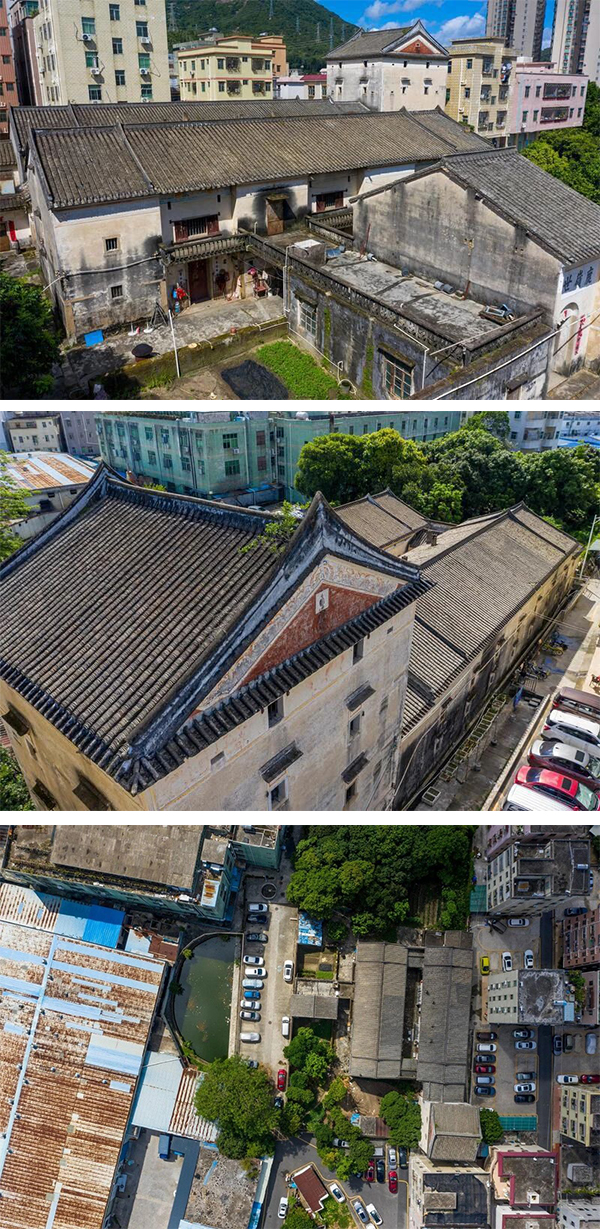
Aerial views of Luling Ancestral Residence.

ICP Registration Number: 粤ICP备17054870号-1
 Police Registration Number:44031002000124
Website ID: 4403910001
Police Registration Number:44031002000124
Website ID: 4403910001
Government Service Hotline: 0755-12345
Website Technical Support:zwxx@szpsq.gov.cn
Sponsored by: General Office of CPC Pingshan District Committee (General Office of Pingshan District People's Government, Foreign Affairs Office of Pingshan District, and Archives Administration of Pingshan District)



 HOME
HOME PINGSHAN GOVERNMENT
 NEWS
NEWS ABOUT PINGSHAN
 INVEST IN PINGSHAN
 LIFE
LIFE SERVICES
 FAQ
FAQ CHINESE
 FRANÇAIS
 日本語
日本語 한국어
한국어